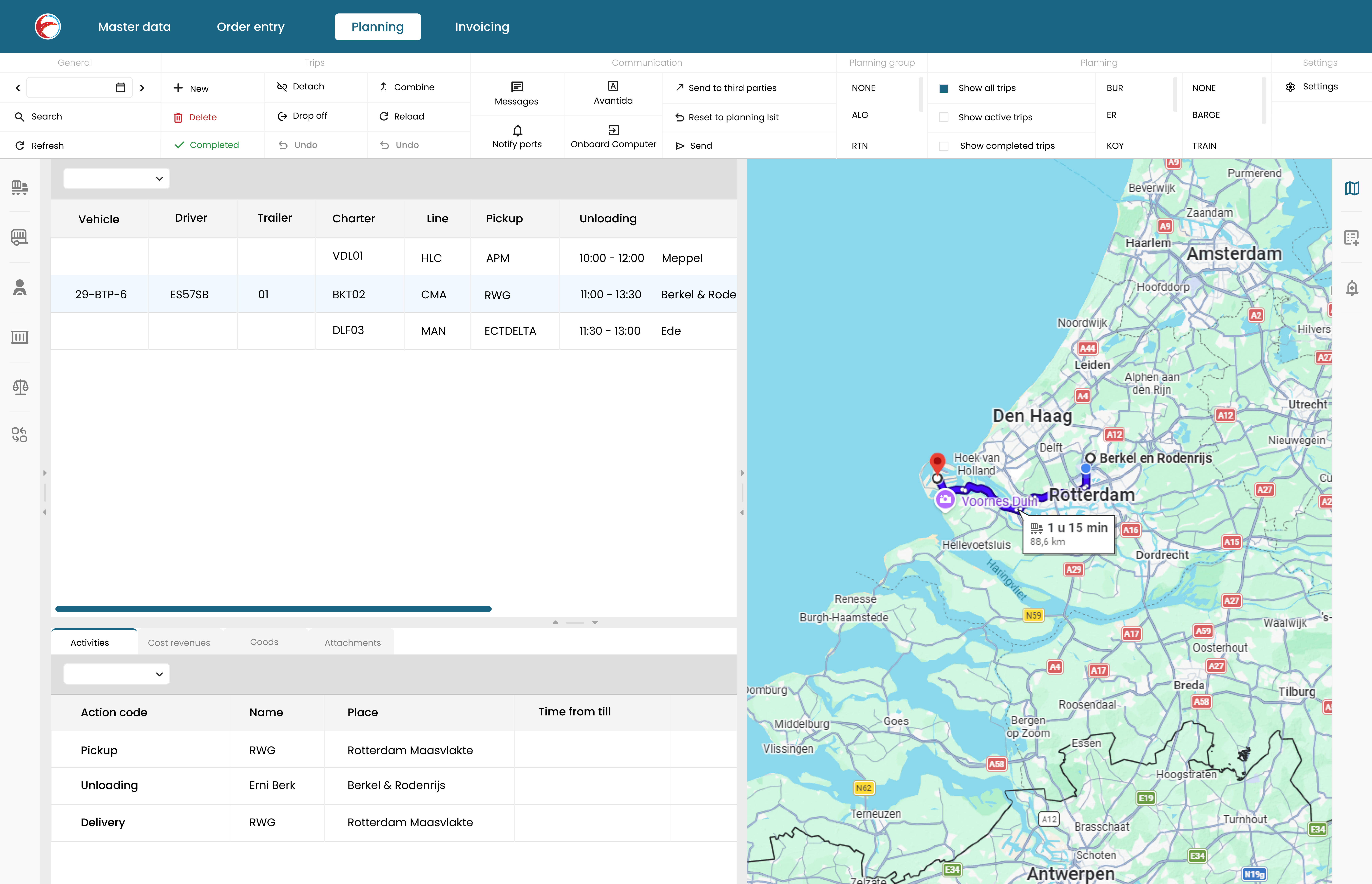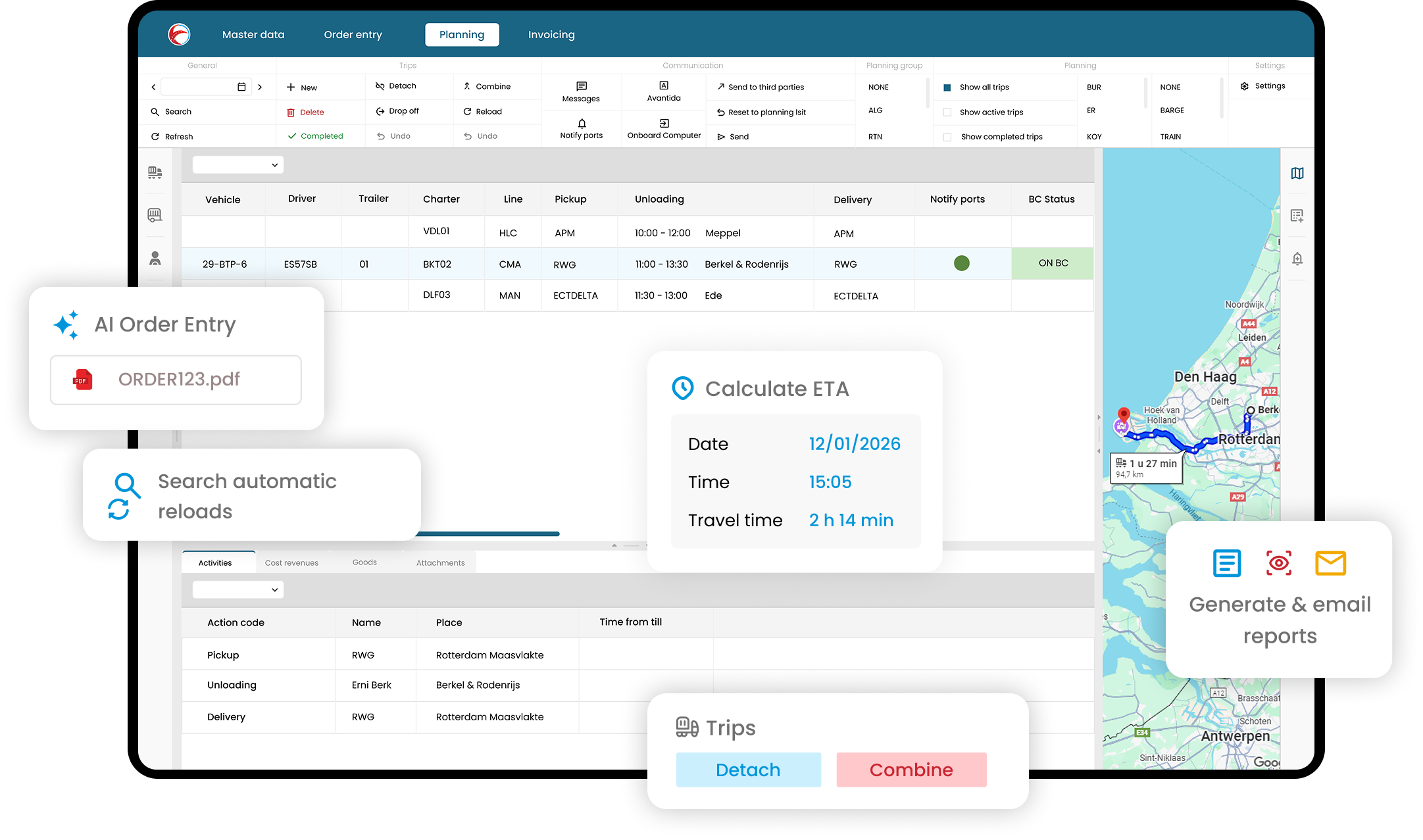

Container transport is becoming increasingly complex, but with smart planning and automation via e-Lips TMS, you maintain control over routes, time slots, and communication.
Container transport is becoming increasingly complex. Waiting times at terminals, tight time slots, and increasing pressure on capacity make route planning more challenging than ever. Transport companies that continue to work with manual processes lose time, overview, and margin.
With the right container transport planning software, you maintain control, work more efficiently, and prevent unnecessary errors.
Why container transport is becoming increasingly complex
Daily practice in container logistics is changing rapidly. Particularly around major hubs such as the Port of Rotterdam, multiple factors come into play simultaneously:
Waiting times and delays at terminals
Working with time slots that change continuously
Complex administration and documentation
Increasing pressure on drivers and equipment
Whereas a trip could previously be planned simply, this now requires constant coordination and insight.

The problem: manual scheduling no longer works
Many transport companies still plan (partially) manually. Think of Excel, separate systems, or communication via telephone and email.
This results in:
Lack of real-time insight
Errors due to manual entry
Time lost switching between systems
Difficulty adjusting quickly
Especially in container transport, where timing is crucial, this directly leads to inefficiency and higher costs.
The solution: container transport planning software
Modern transport companies are switching to container transport planning software to centralize and automate processes.
Key benefits:
One central schedule for all trips
Real-time insight into transport statuses
Faster response to changes
Better utilization of trucks and drivers
This shifts planning from reactive to proactive operation.
Data-driven planning instead of gut feeling
Whereas planners used to rely primarily on experience, planning is becoming increasingly data-driven.
With software, you get:
Insight into available capacity
Immediate overview of delays
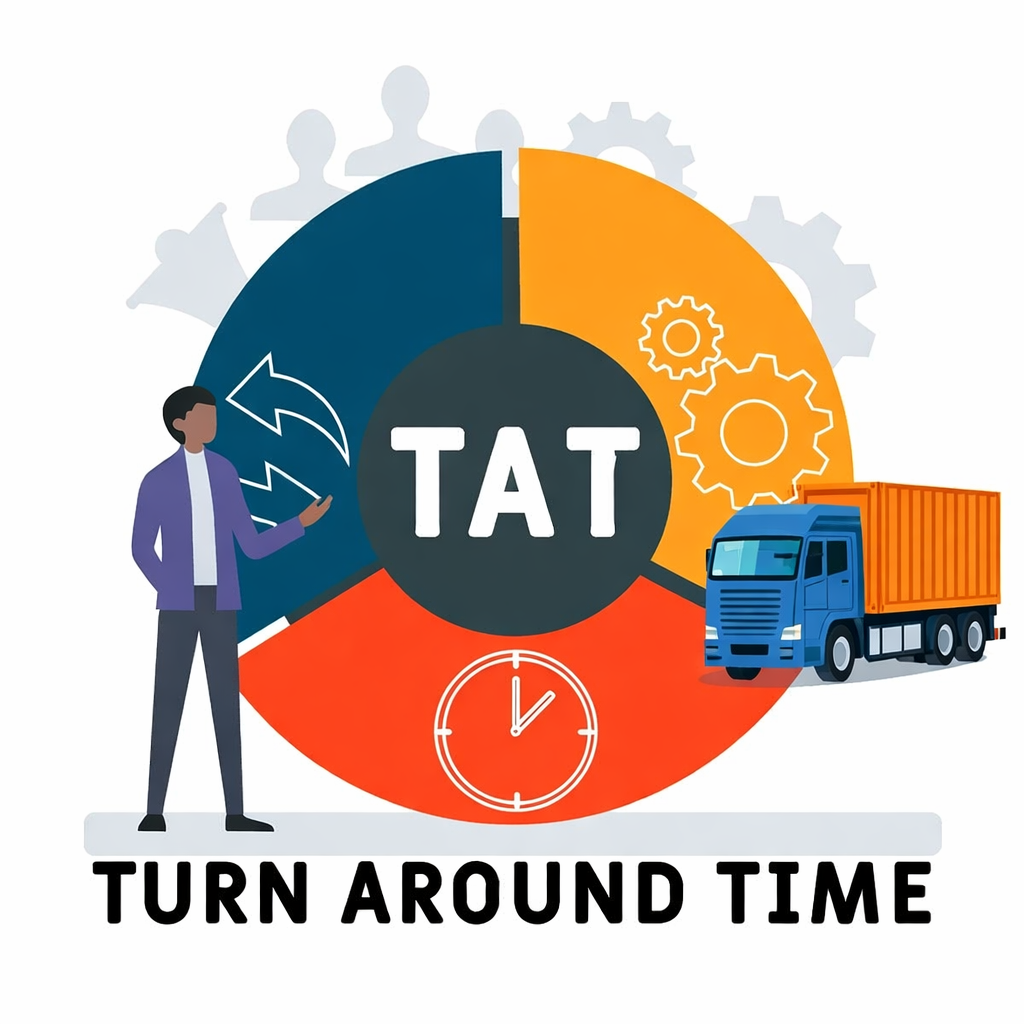
Historical data for better decision-making, such as ETA & TAT
Less reliance on standalone tools
This ensures greater control and predictability in operations.
Grip on time slots and terminals
One of the biggest challenges in container transport is managing terminals and time slots.
Without good software, problems arise such as:
Missed time slots
Long waiting times
Inefficient trips
Extra costs
With smart planning:
Include your time slots directly
Plan more efficiently around terminals
Anticipate delays
Prevent downtime
More efficient use of capacity
Capacity is scarce. Therefore, optimal utilization is crucial.
Without a good system, you often see:
Empty kilometers
Poor distribution of trips
Driver overload
Unused equipment
With the right software:
Combine your trips smarter
Reduce your costs
Increase your productivity
Maintain control over your operations
Fewer errors, more reliability
In container transport, small errors can have major consequences.
Consider:
Incorrect container details
Incorrect locations
Miscommunication
Missing documents
Through automation:
You work with up-to-date data
You reduce errors
You increase your reliability
You improve your customer satisfaction
e-Lips TMS: automation in container transport
With e-Lips TMS, you automate a large part of the planning process within container transport.
Where normally a lot of time is spent on phone calls and emails, this now happens automatically.
Customers receive real-time notifications regarding:
Waiting hours
Seal number updates
Container number availability
As a result, customers no longer need to call, and everyone remains immediately informed.
Automatically manage time slots and pre-notifications
A major advantage of e-Lips TMS is the automation surrounding terminals.
Instead of manual:
Logging into various portals
Submitting pre-notifications
Claiming time slots
The system does this automatically.
This means:
Less manual work
Fewer errors
Faster processing
More focus on planning
Smart management of reloads and costs
In container transport, it is not just about planning, but also about profitability. Empty mileage and fluctuating costs have a direct impact on the margin.
With e-Lips TMS, this is also automated and made transparent.
The system actively helps in finding reloads (return trips). Based on planned trips and available capacity, the system automatically searches for suitable follow-up assignments. As a result:
You reduce empty mileage
You increase the utilization rate
You get more return from every trip
Always keep a grip on diesel costs
Fuel prices continue to change constantly. This makes it difficult to keep agreements with customers up-to-date and fair.
With e-Lips TMS you can:
Easily set up new diesel agreements
Link these directly to customers
Have them automatically applied to trips and invoicing
This ensures you always work with current rates, without manual calculations.
Financial insight without extra work
Because planning and costs come together in one system:
You have immediate insight into revenue per trip
You can see where profit or loss arises
You can adjust more quickly
This makes not only your operation stronger, but also your financial control.
More peace of mind and control over planning
Automation creates overview and peace of mind.
Planners can focus on optimization instead of putting out fires.
Result:
Fewer phone calls and emails
Faster turnaround times
Better collaboration
More control over processes
Conclusion: container transport requires smart software
Container transport is not getting simpler. The complexity is only increasing.
Companies that continue to work with manual processes will get stuck. Carriers who choose container transport planning software maintain control.
With e-Lips TMS:
Automate your processes
Improve your communication
Optimize your planning
Increase your efficiency
The future of container transport revolves around insight, automation, and control.